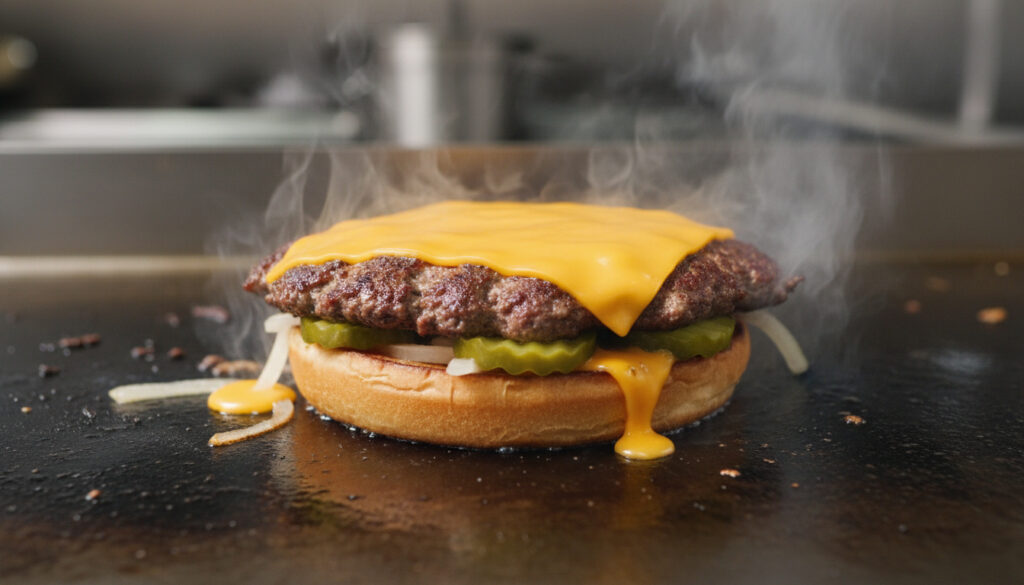
What Is a Smash Burger – Definition, Technique, History
A smash burger is a thin beef patty pressed flat onto a searing hot griddle or skillet, creating a crispy, caramelized crust through the Maillard reaction while maintaining a juicy interior.
This technique diverges significantly from traditional burger preparation. Instead of preserving thickness, the method prioritizes maximum surface contact with high heat, yielding bold flavor and distinctive texture in under five minutes.
What Is a Smash Burger?
Thin beef patty smashed onto griddle for maximum crust
High-heat smash using spatula or press
Crispy edges with caramelized Maillard crust
1960s Kentucky diners, revived 2000s
Key Insights:
- Maximum surface contact creates superior browning compared to thick patties
- Cooking completes in under five minutes due to thin profile
- High-fat beef (80/20 blend) proves essential for juiciness
- Single smash action prevents moisture loss
- Loose ground beef balls outperform pre-formed patties
- Stacking multiple thin patties amplifies flavor complexity
| Fact | Detail |
|---|---|
| Patty Weight | 2-4 ounces loose ground beef |
| Target Thickness | 1/4 inch (0.6 cm) after smashing |
| Fat Content | 20-30% for optimal render |
| Surface Temperature | 450°F+ (232°C+) griddle or cast iron |
| Cook Time | 1-2 minutes per side |
| Total Preparation | Under 5 minutes |
| First Documented | 1960s Ashland, Kentucky |
| Chain Popularization | Smashburger, 2000s |
How Do You Make a Smash Burger?
Preparation begins with high-quality ground beef containing 20-30% fat content, typically an 80/20 blend. Form the meat into loose balls using 2-4 ounces per portion, avoiding compression to preserve fat pockets that render during cooking.
Selecting the Right Meat
Fresh, never-frozen beef produces superior results. The high fat percentage ensures the patty remains juicy despite aggressive heat exposure. According to Serious Eats, loose beef balls allow even distribution of fat and create irregular edges that crisp more effectively than uniform circles.
Avoid pre-formed patties. Loose beef balls enable the fat to render properly and prevent the dense, rubbery texture associated with over-handled meat.
The Smashing Method
Preheat a cast iron skillet or flat-top griddle for 5-10 minutes until screaming hot. Place the beef ball on the surface and press firmly once, using a sturdy spatula, dedicated burger press, or even a No. 10 bean can, flattening to approximately 1/4 inch thickness.
Season immediately after smashing with salt and pepper. Cook without moving for 1-2 minutes to develop the crust, then flip once. Add cheese during the final minute if desired. Food Network recipes emphasize that pressing the patty again after flipping squeezes out essential juices.
Assembly and Toppings
Toast the buns and apply sauce—typically a mayonnaise-based blend—before adding the patty. Traditional toppings include lettuce, tomato, pickles, and onions. For those seeking regional flavors, Best Papa a la Huancaina Near Me – Authentic Guide & Recipe offers insights into Peruvian accompaniments that complement beef dishes.
Why Are Smash Burgers So Crispy?
The distinctive crunch stems from the Maillard reaction, a chemical browning process that occurs when amino acids and sugars in the beef encounter temperatures above 300°F (149°C). Smashing maximizes surface area contact with the hot griddle, accelerating this reaction across the entire patty face.
The Science of Searing
According to Culinary Arts Switzerland, the Maillard reaction develops savory, nutty flavors while creating the textural contrast between crispy exterior and tender interior. This chemical process fundamentally differs from simple caramelization, producing hundreds of distinct flavor compounds.
Thin patties achieve edge-to-edge browning impossible with thick burgers. The reduced thickness prevents overcooking the center while allowing the entire surface to develop crust.
Surface Area and Heat
The 1/4-inch thickness ensures rapid heat penetration. The high-fat content renders quickly, creating a lacey, crunchy perimeter while the interior remains moist.
Financial considerations for home cooking equipment may arise when selecting griddles. Those evaluating membership benefits for kitchen purchases might reference Does Costco Take Visa – Complete Guide to Payments for payment options on cast iron cookware.
Where Did Smash Burgers Come From?
The technique emerged from American diner culture, with multiple historical threads contributing to its development.
The Kentucky Origin Story
The specific smash burger method traces to the 1960s at Dairy Cheer in Ashland, Kentucky. A cook accidentally pressed a beef ball with a bean can, according to The Kitchen at PR, discovering that the flattened patty produced superior flavor and crispiness compared to thick alternatives.
Great Depression Precursors
Earlier precedents appear in the early 1900s Midwest diner scene. During the Great Depression in 1932, cooks developed techniques smashing beef into onions to stretch limited meat supplies, creating flavor-packed thin patties that fed more customers economically.
While the 1960s Kentucky origin documents the specific “smash” technique, earlier thin-patty methods existed. No single inventor holds definitive credit for the concept.
The Modern Revival
The format remained regional until the 2000s, when the Smashburger chain popularized gourmet versions using the “smash & sear” method. This commercialization transformed the diner technique into a mainstream culinary trend served in fast-casual establishments nationwide.
How Did Smash Burgers Evolve Through the Decades?
-
Depression-era cooks in the Midwest smash beef into onions to extend meat supplies.
Source: Historical diner records
-
Dairy Cheer in Ashland, Kentucky documents the first intentional smash technique using a bean can.
Source: The Kitchen at PR
-
Smashburger chain launches, introducing the technique to nationwide fast-casual dining.
Source: Smashburger
-
Social media platforms popularize home cooking methods, driving cast iron skillet sales and DIY techniques.
Source: Serious Eats
What Facts Are Definitive About Smash Burgers?
| Established Information | Uncertain or Debated Details |
|---|---|
| Technique requires 1/4-inch thickness | Exact nutrition values vary significantly by recipe |
| Maillard reaction creates the crust | Specific caloric content per serving |
| 1960s Kentucky origin documented | Precise identity of the Dairy Cheer cook |
| High-fat beef (80/20) produces optimal results | Whether earlier Depression techniques constitute “true” smash burgers |
| Single smash prevents moisture loss | Uniform standards for “authentic” preparation |
The USDA food safety guidelines recommend cooking ground beef to 160°F (71°C) internal temperature, though the thin profile of smash burgers typically exceeds this threshold rapidly during the searing process.
What Sparked the Smash Burger Trend?
The resurgence reflects broader shifts in American dining preferences. As consumers sought bolder flavors and faster preparation times, the smash burger’s intense browning and quick cook time offered distinct advantages over thick, medium-rare gourmet patties that dominated the 1990s.
Home cooking accessibility accelerated adoption. Unlike specialized smoking equipment or precise temperature controls required for thick burgers, smash burgers demand only a heavy skillet and spatula. This democratic approach aligns with economic pressures favoring affordable, high-flavor meals.
The technique also accommodates customization. Variations including the “onion smash”—pressing the patty directly onto grilled onions—demonstrate adaptability while maintaining the core crispy texture that defines the style. Wikipedia’s entry on hamburger history traces similar regional adaptations throughout the twentieth century.
What Do Authoritative Sources Say About Smash Burgers?
Culinary institutions emphasize the technique’s scientific basis over arbitrary preference.
A smash burger is a thin beef patty pressed flat onto a hot griddle or skillet, creating a crispy, caramelized crust via the Maillard reaction while keeping the interior juicy.
— Culinary Arts Switzerland
Smashing maximizes surface area for contact, triggering the Maillard reaction—a chemical browning process that develops savory, nutty flavors and crispy edges.
— Smashburger
Smash burgers trace to the 1960s at Dairy Cheer in Ashland, Kentucky, where a cook accidentally pressed a beef ball with a bean can, yielding superior flavor and crispiness.
— The Kitchen at PR
What Are the Key Takeaways About Smash Burgers?
The smash burger technique transforms humble ground beef into a texturally complex dish through simple physics: maximum heat, minimal thickness, and precise timing. By prioritizing surface area over volume, the method delivers concentrated flavor impossible with traditional thick patties. Whether executed on a commercial flattop or a home cast iron skillet, the combination of high-fat beef, screaming hot surfaces, and a single decisive smash creates the definitive crispy, juicy burger.
Frequently Asked Questions
What’s the best smash burger recipe?
Use 2-4 oz of 80/20 ground beef formed into loose balls. Preheat a cast iron skillet until very hot, smash to 1/4-inch thickness, season with salt and pepper, cook 1-2 minutes per side, and serve on a toasted bun with cheese and traditional toppings.
What meat for smash burgers?
High-fat ground beef with 20-30% fat content, typically labeled 80/20 or 70/30. Fresh, never-frozen beef produces the best crust and texture.
Tips for perfect smash burger?
Ensure the griddle is preheated for 5-10 minutes, use loose beef balls rather than pre-formed patties, smash only once to avoid squeezing juices, and resist pressing the patty again after flipping.
Smash burger vs regular burger?
Smash burgers feature thin, crispy patties with caramelized crusts cooked quickly on griddles, while regular burgers use thick, gently formed patties grilled or seared without pressing, emphasizing interior juiciness over exterior crunch.
Who invented the smash burger?
The specific technique traces to a cook at Dairy Cheer in Ashland, Kentucky during the 1960s who accidentally used a bean can to flatten a beef ball, though earlier thin-patty methods existed in Midwest diners.
How thin should smash burger patty be?
Approximately 1/4 inch (0.6 cm) thick after smashing. This thickness ensures rapid cooking and maximum surface contact for crust formation while preventing overcooking.
Why are smash burgers better than regular burgers?
The Maillard reaction creates more complex flavors and crispy textures impossible with thick patties. The thin profile also allows faster cooking and the option to stack multiple patties for enhanced beef flavor.
Can you make smash burgers at home?
Yes, using a cast iron skillet or flat-top griddle preheated for 5-10 minutes, a heavy spatula or burger press, and high-fat ground beef. Home cooking achieves results comparable to restaurants with proper heat management.
More related posts
 Jean-Philippe Wauthier: Age, Partner, Burnout & Career
 Bureau de Poste Autour de Moi: La Poste & An Post Guide
 Aimee Lou Wood Movies and TV Shows: Full Filmography
 Steve Martin 2025: What Happened to the Comedy Legend
 Jack Black: Health, Controversy, Ethnicity, and Regrets
 Asia Cup 2025 Schedule – Full Fixtures, Results, Venues
 Banana Republic Outlet Canada: Locations, Sales & Stores