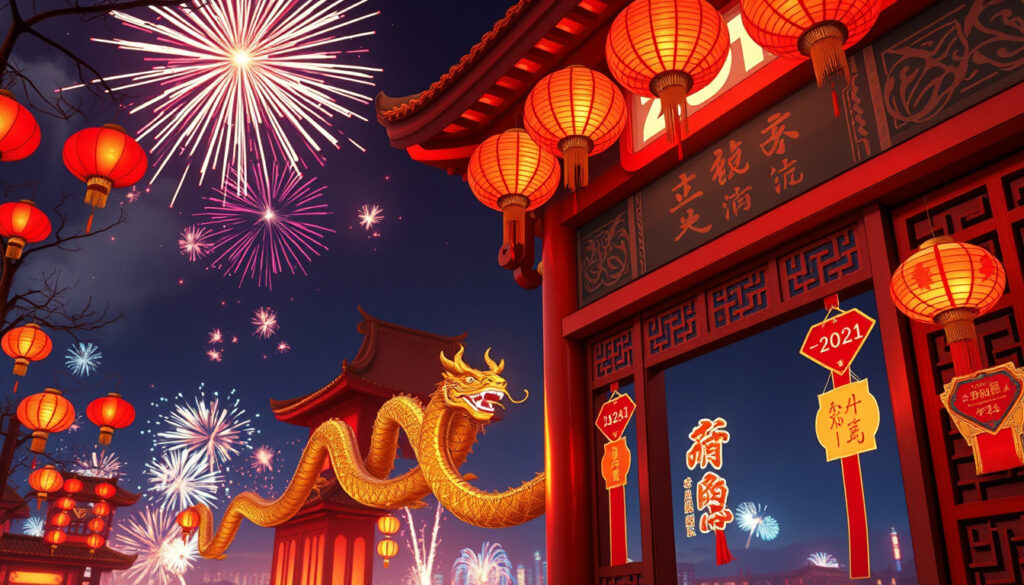
Happy Lunar New Year: Greetings, Etiquette & Differences
If you’ve ever stumbled over a Lunar New Year greeting and wondered whether “Happy Lunar New Year” was actually the right thing to say, you’re in good company. Millions of people face the same small-but-real dilemma every January or February—and the answer matters more than you might think. This guide walks you through the most common greetings in Mandarin and Cantonese, why the terminology matters culturally, and exactly how to wish someone well across different traditions.
Calendar Type: Lunisolar · 2026 Zodiac: Fire Horse · 2027 Date: February 6 · Common Cantonese Greeting: Gong hei fat choy · Celebrated By: Multiple Asian cultures
Quick snapshot
- The phrase “Xīn nián kuài lè” ( ) means “New Year happiness” in Mandarin (Migaku language learning blog)
- In Cantonese, “Gong hei fat choy” ( ) translates to “Wishing you happiness and prosperity” (Hong Kong Foodie Tours food guide)
- “Xīnnián hǎo” ( ) is the most common way to greet family and close friends in Mandarin (China Highlights travel resource)
- Exact global participant count across all celebrating communities
- Universal etiquette rules that apply across all cultural contexts
- 2026: February 17 — Year of the Fire Horse begins (Hong Kong Foodie Tours holiday calendar)
- 2027: February 6 — Year of the Fire Goat begins (China Highlights seasonal guide)
- Master specific greetings for different relationships and contexts
- Understand when to use Chinese New Year versus Lunar New Year terminology
Here’s what you need to know to navigate greetings accurately across cultures.
| Element | Detail |
|---|---|
| Starts On | Lunar calendar new year |
| 2026 Theme | Year of the Fire Horse |
| 2027 Date | February 6 |
| Primary Cultures | Chinese, Vietnamese, Korean |
How do you say happy Lunar New Year?
English speakers have two main options: stick with “Happy Lunar New Year” or make the leap into Mandarin or Cantonese. Both routes have merit, but the regional and relational context matters enormously.
Mandarin greetings
In Mandarin, “Xīnnián hǎo” ( ) is the most common way to wish family and close friends a happy Chinese New Year—it literally translates to “Good New Year” (China Highlights cultural guide). For strangers or more formal settings, “Xīn nián kuài lè” ( ) works better—it means “New Year happiness” and is the standard greeting you’ll hear in shops, restaurants, and public spaces (Migaku language learning resource).
Cantonese phrases
The Cantonese pronunciation of “Xīn nián kuài lè” is “Sun nin fai lok” ( )—same characters, different sounds (Migaku phrase comparison guide). But the greeting that genuinely defines Cantonese-speaking communities worldwide is “Gong hei fat choy” ( ), meaning “Wishing you happiness and prosperity” (Hong Kong Foodie Tours local customs). This phrase is usually the first thing said when Cantonese speakers meet during the holiday, often accompanied by the traditional fist-and-palm salute.
For family and close friends in Mandarin-speaking contexts, use “Xīnnián hǎo.” For strangers or formal situations across all Chinese communities, “Gong hei fat choy” or “Xīn nián kuài lè” signals genuine cultural awareness.
Chinese New Year VS Lunar New Year: Differences and Controversies
Three competing terms circulate in English discourse: Chinese New Year, Lunar New Year, and the more specific Spring Festival. Each carries different weight depending on who’s listening.
Term origins
“Chinese New Year” draws directly from the lunar-solar calendar China developed and exported across Asia over centuries. “Lunar New Year” reframes the same celebration to emphasize the astronomical basis—tracking moon cycles—rather than the cultural origin. “Spring Festival” (Chūnjié) is the official Mandarin term used within China itself.
Cultural scope
The distinction matters because multiple cultures beyond China celebrate their own version of the lunar new year. Vietnam’s Tết uses a variant of the same calendar. Korea’s Seollal follows lunar-solar calculations too. Calling it “Lunar New Year” acknowledges this broader reach without centering any single culture. That said, “Chinese New Year” remains deeply embedded in diaspora communities worldwide and in global commerce—the term most people hear in English-language media.
| Term | Primary Context | Cultural Scope |
|---|---|---|
| Chinese New Year | Diaspora communities, English media | Chinese-centric |
| Lunar New Year | Inclusive usage, international bodies | Multi-cultural (China, Vietnam, Korea) |
| Spring Festival | Official China usage | Mandarin-language contexts |
The implication: neither term is wrong, but “Lunar New Year” is increasingly preferred in international and pan-Asian contexts, while “Chinese New Year” remains standard in Western English and Chinese diaspora communities.
Is it okay to wish happy Lunar New Year?
The short answer is yes—wishing someone a happy Lunar New Year is perfectly polite in virtually any context. But the longer answer involves some cultural subtleties worth understanding.
Etiquette considerations
For someone unfamiliar with the holiday’s nuances, “Happy Lunar New Year” represents a genuine, respectful attempt to participate. Most recipients will appreciate the effort regardless of which term you use. The gesture of acknowledging the holiday at all signals cultural awareness and good faith.
Why some avoid it
Some people prefer to use the greeting in the recipient’s language—whether Mandarin, Cantonese, Vietnamese, or Korean. This signals deeper cultural engagement, but it also carries risk: mispronunciation or incorrect context can feel awkward or even disrespectful. If you’re uncertain, asking someone how they prefer to be greeted is perfectly acceptable.
The effort to acknowledge Lunar New Year at all—however imperfect—generally outweighs the risk of using the “wrong” term. But when addressing someone from a specific cultural background, leaning into their native-language greeting shows respect.
What does “gong hei fat choi” mean?
“Gong hei fat choy” ( ) is the cornerstone of Cantonese New Year greetings worldwide. Understanding it opens the door to meaningful connection with millions of speakers.
Literal translation
Breaking down the phrase: “Gong” ( ) means respect or congratulations, “hei” ( ) means happiness, “fat” ( ) is an abbreviation for the word for wealth or prosperity, and “choy” ( ) directly means wealth or fortune. Combined, it translates to roughly “Wishing you respect, happiness, and prosperity.”
Usage contexts
“Gong hei fat choy” is typically used when first meeting someone during the holiday period (Hong Kong Foodie Tours greeting guide). It’s often paired with “sun tai gin hong” ( ), which means “good health”—addressing the second most important wish after financial prosperity. The phrase works in both casual and formal settings, making it versatile for English speakers who want to engage authentically with Cantonese traditions.
Global adoption of “Lunar New Year” in English reflects growing awareness that the holiday belongs to multiple cultures, not just China. This shift is accelerating in international organizations, sports leagues, and multinational corporations.
Who celebrates Lunar New Year?
Lunar New Year stretches far beyond China, though Chinese communities remain the largest and most visible practitioners worldwide.
Countries involved
China’s 1.4 billion people make it the obvious center, but Vietnam’s Tết Nguyên Đán celebration draws on the same calendar system with distinct local customs. Korea’s Seollal follows lunar-solar calculations too. Singapore’s various ethnic Chinese communities, Malaysia’s multi-ethnic celebrations, and Indonesia’s Chinese diaspora all mark the occasion. Even in Mongolia and parts of Tibet, lunar-based new year celebrations form central cultural rituals.
Global communities
Beyond Asia, diaspora communities in the United States, Canada, the United Kingdom, Australia, and France observe the holiday with varying degrees of cultural preservation. Chinatowns in major cities become focal points, but many families celebrate privately with the same traditions carried from their ancestral homelands.
The pattern here is clear: linguistic precision matters when greeting someone from a specific cultural background, but goodwill bridges imperfect vocabulary.
How to wish someone a happy Lunar New Year: Step-by-step
Here’s how to apply these greetings practically, depending on your situation and relationship with the recipient.
- For close family and friends in Mandarin-speaking households: Use “Xīnnián hǎo” ( ). Pronounce it roughly as “shin-nee-en how” with rising tones.
- For colleagues, neighbors, or casual acquaintances: Use “Xīn nián kuài lè” ( ). Pronounce it as “shin-nee-en kwhy-luh.”
- For anyone with Cantonese-speaking background or in a Chinatown context: Use “Gong hei fat choy” ( ). Pronounce it as “gong hey fat choy” with the “choy” rhyming with “boy.”
- For broad, inclusive communication in English: “Happy Lunar New Year” works perfectly well and is increasingly preferred in international contexts.
- When unsure: Ask directly—”How do you prefer to be greeted for the new year?” Most people will appreciate the question and the effort it signals.
What this means: the “best” greeting depends entirely on your audience. A blanket rule doesn’t exist—context and relationship guide the choice.
Timeline and what comes next
The lunar new year falls on different dates each year because the lunisolar calendar adds leap months to keep pace with the solar year.
| Date or Period | Event |
|---|---|
| February 17, 2026 | Year of the Fire Horse celebrations begin |
| February 6, 2027 | Year of the Fire Goat begins |
For those planning celebrations or travel, the extended holiday period in China typically spans 15 days, with the final day (Lantern Festival) marking the formal conclusion. Vietnam’s Tết often follows a similar arc but with distinct culinary traditions and local customs.
Upsides
- Genuine effort to acknowledge the holiday is universally appreciated
- Using a native-language greeting deepens personal connection
- “Lunar New Year” terminology is becoming standard in international contexts
Downsides
- Mispronunciation can undermine good intentions
- Using the “wrong” term may offend those with strong cultural preferences
- The diversity of greetings makes any single choice potentially incomplete
“Happy Lunar New Year to everyone celebrating — wishing you and your family health, happiness and prosperity in the Year of the Fire Horse.”
Korean Embassy in Ireland (official statement, January 2025)
“Gong hei fat choy” and “Xīn nián kuài lè” are both widely used across global Chinese communities, but they carry different cultural weight depending on regional and contextual factors.
Quillbot language analysis (grammatical and usage patterns)
The pattern here is clear: linguistic precision matters when greeting someone from a specific cultural background, but goodwill bridges imperfect vocabulary. For English speakers, the path forward is straightforward—acknowledge the holiday, learn the basic greetings, and adjust based on context. For those with deeper cultural ties, the choice becomes an expression of identity.
Related reading: How to Apply for Canadian Citizenship · Personal Finance Canada Reddit
Frequently asked questions
What is the history of Chinese New Year?
Chinese New Year traces back over 3,000 years to the Shang Dynasty, originally tied to harvest celebrations and religious rituals. The holiday evolved through multiple imperial periods, incorporating mythological elements like the story of Nian (the monster) and incorporating traditions from various regional cultures. Today it combines ancient agricultural rituals, family reunion customs, and Buddhist/Taoist religious practices into a complex, multi-layered celebration.
When is Lunar New Year 2026?
Lunar New Year 2026 falls on February 17. This marks the beginning of the Year of the Fire Horse in the Chinese zodiac. The celebration typically runs through the Lantern Festival on March 3, spanning approximately 15 days of observances.
What animal is 2026 in Chinese zodiac?
2026 is the Year of the Fire Horse. The Horse is the seventh animal in the 12-year zodiac cycle, associated with energy, independence, and enthusiasm. The Fire element adds warmth, passion, and drive to the Horse’s natural characteristics.
How long is Lunar New Year holiday?
In China, the official public holiday typically runs seven days, though many families extend celebrations for up to 15 days until the Lantern Festival. Vietnam’s Tết observance similarly spans multiple days, often with travel and family gatherings central to the period.
Are there specific colors for Lunar New Year?
Red and gold dominate Lunar New Year decorations and clothing. Red symbolizes good fortune and joy, while gold represents wealth and prosperity. White is generally avoided as it traditionally associates with mourning. These color conventions apply across Chinese, Vietnamese, and Korean celebrations, though specific customs vary by culture.
What foods are eaten during Lunar New Year?
Different cultures emphasize different foods. In Chinese tradition, dumplings symbolize wealth, fish represents abundance, and glutinous rice cakes (nián gāo) signify progress. Vietnamese Tết features bánh chưng (square cake) and dried watermelon seeds. Korean Seollal serves tteokguk (rice cake soup). Each dish carries symbolic meaning tied to wishes for the coming year.
How do you decorate for Lunar New Year?
Decorations typically include red lanterns, paper couplets with lucky phrases, and images of lucky gods and zodiac animals. Many families clean their homes thoroughly before the holiday to “sweep away” bad luck, then decorate with red and gold ornaments. In Chinese communities, ” ” (Fu, meaning fortune) characters often appear upside down—because “upside down fortune” sounds like “fortune arrives” in Chinese.
More related posts
 Free Tarot Card Reading – Best Sites and How-To Guide
 180 USD to CAD: Live Rate & Conversion Fees
 Ryan Phillippe: Sobriety, Relationships, and Career in 2024
 Priyanka Chopra: Age, Net Worth, Husband, Surrogacy
 The Pitt Where to Watch: UK, Ireland Streaming Guide
 Big Little Lies Season 3 – Confirmation, Cast and Key Updates
 Sydney Sweeney Movies and TV Shows: Complete Career Guide
 Harvey Weinstein: Legal Cases, Health, and Celebrity Reactions