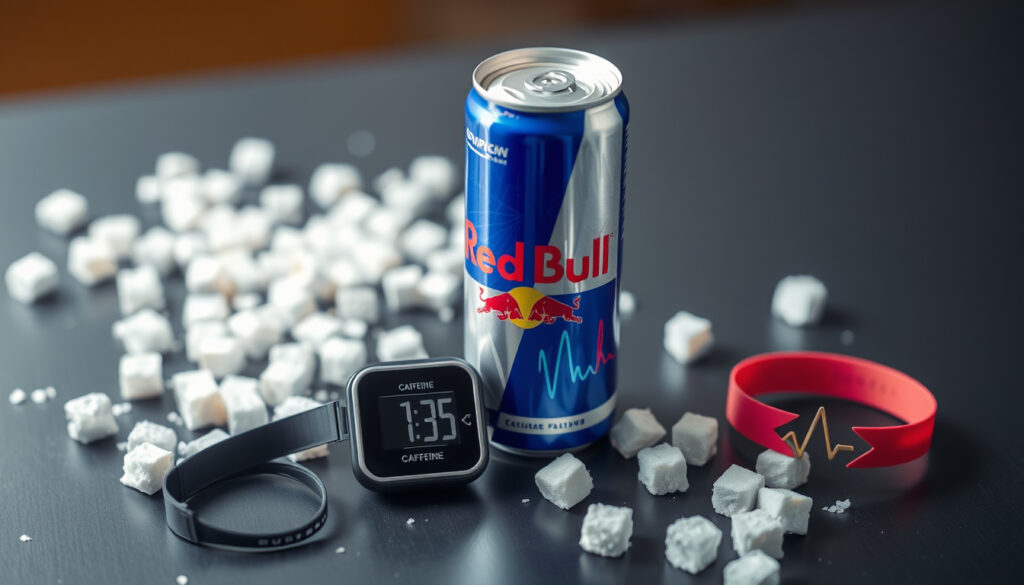
Is Red Bull Healthy? Ingredients, Effects, and Safety Facts
You’ve probably grabbed a can of Red Bull at some point — maybe during an all-nighter or before a long drive. But as familiar as the blue-and-silver can is, the facts about what’s inside and how it affects your health are less straightforward.
Founded: 1987 ·
Global market share: 13% ·
Caffeine per 250ml can: 80 mg ·
Sugar per 250ml can: 27 g ·
Owner: Red Bull GmbH
Quick snapshot
- Red Bull is a non-alcoholic beverage (Red Bull US ingredients page (official product info))
- One 250 ml can contains 80 mg caffeine and 27 g sugar (Red Bull US ingredients page)
- High sugar intake is linked to weight gain and metabolic issues (Harvard Nutrition Source (university public health research))
- Long-term health effects of daily moderate consumption (PMC review: The Dark Side of Energy Drinks (peer-reviewed research))
- Safety for adolescents and pregnant women (PMC review: Health Effects of Energy Drinks on Children, Adolescents, and Young Adults)
- Effectiveness of taurine in improving athletic performance (Red Bull US ingredients page)
- 1987 — Red Bull founded in Austria (Wikipedia (encyclopedia))
- 2012 — 5 billion cans sold globally (Wikipedia)
- 2023 — market share estimated at 13% (PMC review)
- Growth of sugar-free and organic variants (Red Bull US)
- Increased regulatory scrutiny on caffeine content (NIH/PMC: Energy Drinks: Food, Dietary Supplement, or Drug?)
- Competition from lower-sugar alternatives (Harvard Nutrition Source)
Here is a summary of the key facts about Red Bull.
| Attribute | Value |
|---|---|
| Year founded | 1987 |
| Headquarters | Fuschl am See, Austria |
| Owner | Red Bull GmbH |
| Caffeine per 250 ml | 80 mg |
| Sugar per 250 ml | 27 g |
| Global market share | 13% |
Is Red Bull a healthy energy drink?
Nutritional profile of Red Bull
Red Bull’s standard 8.4 fl oz (250 ml) can contains 80 mg of caffeine and 27 g of sugar from sucrose and glucose, according to the official product data. It also includes taurine, B-group vitamins, and water. The sugar content alone accounts for more than half the American Heart Association’s recommended daily limit for added sugar (36 g for men, 25 g for women).
Health risks associated with energy drinks
- High sugar intake from energy drinks is linked to weight gain, type 2 diabetes, and dental erosion (Harvard Health (university medical publication))
- Caffeine can cause insomnia, anxiety, and increased heart rate, especially when combined with other sources (PMC review: Health Effects of Energy Drinks on Children, Adolescents, and Young Adults)
Expert opinions on daily consumption
“Energy drinks are not recommended for children or adolescents, and adults should limit intake due to high sugar and caffeine content.”
— Harvard Health editorial team, based on FDA and dietary guidelines
A single can pushes one-third of the daily added sugar limit for a woman. For anyone monitoring sugar intake, Red Bull is a splurge, not a staple.
The implication: Occasional consumption may be fine, but daily use pushes sugar intake past recommended limits.
What exactly does Red Bull do?
Caffeine’s effect on alertness
Caffeine, the main active ingredient, is a central nervous system stimulant. It temporarily blocks adenosine receptors, reducing fatigue and improving concentration for 1–4 hours (Red Bull US). The 80 mg in a standard can is roughly equivalent to a small cup of coffee.
Taurine and other ingredients
- Taurine — an amino acid naturally found in the body, synthetically produced for Red Bull (Red Bull US Q&A (brand explanation))
- B vitamins (B3, B5, B6, B12) — added to support energy metabolism (Red Bull US ingredients page)
- Glucose and sucrose — provide immediate sugar rush but also contribute to caloric load
Marketing claims vs scientific evidence
The brand markets Red Bull as improving concentration and reaction speed. While caffeine does boost alertness, independent reviews note that the effects are similar to coffee at equivalent caffeine doses, and the added sugar may offset benefits by causing energy crashes (Healthline (health media review)).
Many of the “energy” claims rely on caffeine alone, not the proprietary blend. A cup of coffee with no sugar can deliver the same alertness without the sugar spike.
The pattern: Red Bull’s primary active ingredient is caffeine, and its advantage over coffee is mainly branding and convenience, not superior performance.
What is the unhealthiest energy drink?
Criteria for ‘unhealthiest’
Nutrition experts rank drinks by sugar content, caffeine dose, and presence of artificial additives. Drinks with more than 30 g of sugar per serving and caffeine over 200 mg are considered riskiest (Harvard Nutrition Source).
Comparison of sugar and caffeine content across brands
Three popular energy drinks show wide variation, with Red Bull falling in the middle on sugar and lower on caffeine.
| Brand | Serving | Caffeine | Sugar |
|---|---|---|---|
| Red Bull | 8.4 fl oz (250 ml) | 80 mg | 27 g |
| Monster Energy | 16 fl oz (473 ml) | 160 mg | 54 g |
| Coffee (black) | 8 fl oz (240 ml) | 95 mg | 0 g |
Regulatory warnings and recalls
In 2018, the American Academy of Pediatrics advised against energy drink consumption for children and teens. Some countries, including France and Denmark, have restricted sales of high-caffeine energy drinks (NIH/PMC: Energy Drinks: Food, Dietary Supplement, or Drug?).
Monster contains more total sugar and caffeine per can, but Red Bull’s high sugar density per ounce is comparable. The “unhealthiest” label depends on serving size and frequency.
What this means: Red Bull is not the worst offender, but its sugar density is high enough to raise concerns.
Is Red Bull alcohol or not?
Legal definition of non-alcoholic beverages
In the US and EU, a non-alcoholic beverage contains less than 0.5% alcohol by volume. Red Bull lists no alcohol in its ingredients and is classified as a soft drink (Red Bull US).
Red Bull’s ingredient list
The only liquids are water, sucrose syrup, and glucose syrup. No ethanol or fermentation products are present (Red Bull US ingredients page).
Myths about Red Bull and alcohol mixing
Mixing Red Bull with alcohol is a separate safety concern. The caffeine can mask the depressant effects of alcohol, leading to overconsumption. The FDA has issued warnings about this combination (Harvard Health).
Is drinking 1 Red Bull a day okay?
Daily caffeine recommendations
The FDA suggests up to 400 mg of caffeine per day for healthy adults (Harvard Health). One Red Bull provides 80 mg — well within that limit. For adolescents, the recommendation is no more than 100 mg per day (PMC review: Health Effects of Energy Drinks on Children, Adolescents, and Young Adults).
Sugar intake guidelines
The American Heart Association recommends limiting added sugar to 36 g (men) and 25 g (women) per day. A single 250 ml Red Bull contains 27 g — exceeding the daily limit for women and covering most of the limit for men (Harvard Nutrition Source).
Individual risk factors
- People with heart conditions or anxiety should avoid caffeine-containing energy drinks (Harvard Health)
- Pregnant women are advised to limit caffeine to 200–300 mg per day, making one Red Bull acceptable but leaving little room for other sources (PMC review)
- Regular daily consumption may contribute to weight gain and insulin resistance over time (Healthline)
The pattern: For the average adult, the choice is clear: occasional use may be fine, but daily consumption risks exceeding sugar limits and may lead to long-term health issues.
Here is a detailed comparison of energy drinks and coffee.
| Attribute | Red Bull (8.4 oz) | Monster (16 oz) | Coffee (8 oz black) |
|---|---|---|---|
| Caffeine | 80 mg | 160 mg | 95 mg |
| Sugar | 27 g | 54 g | 0 g |
| Calories | 110 | 210 | 2 |
| Other stimulants | Taurine, B vitamins | Taurine, guarana, ginseng | None |
| Regulatory warnings | No specific warnings | Has faced scrutiny for caffeine content | Considered safe in moderation |
Red Bull’s nutritional specifications vary by can size.
| Size | Caffeine | Sugar | Calories |
|---|---|---|---|
| 8.4 fl oz (250 ml) | 80 mg | 27 g | 110 |
| 12 fl oz (355 ml) | 111 mg | 38 g | 160 |
| 16 fl oz (473 ml) | 151 mg | 50 g | 210 |
| 20 fl oz (591 ml) | 198 mg | 66 g | 280 |
Upsides
- Quick energy boost from caffeine and sugar
- Contains B vitamins
- Widely available and portable
- Sugar-free option available
Downsides
- High sugar content (27 g per standard can)
- Can cause caffeine crash and jitters
- Linked to dental erosion and weight gain
- May disrupt sleep if consumed late in the day
What we know and what remains uncertain
Confirmed facts
- Red Bull is non-alcoholic (Red Bull US)
- Contains 80 mg caffeine and 27 g sugar per 250 ml (Red Bull US)
- High sugar intake is associated with health risks (Harvard Nutrition Source)
Unclear points
- Long-term effects of moderate daily consumption (PMC review)
- Safety for adolescents and pregnant women (PMC review)
- Effectiveness of taurine in athletic performance (Healthline)
The pattern: The evidence base is solid on short-term effects but limited on long-term daily use, especially for vulnerable groups.
What experts say
“Red Bull is not a health food. It’s a stimulant beverage with a lot of sugar. If you drink it occasionally, you’ll probably be fine, but daily consumption is where the risks add up.”
— Nutritionist cited in a 2026 energy drink ranking by Healthline
“Red Bull Energy Drink is scientifically formulated to improve performance, especially during periods of increased mental or physical exertion.”
— Red Bull GmbH official website (marketing description)
“The FDA advises that healthy adults can safely consume up to 400 mg of caffeine per day. However, high-sugar energy drinks should be consumed in moderation as part of a balanced diet.”
— US FDA and Harvard Health guidelines
The pattern: For the average adult, the choice is clear: occasional use may be fine, but daily consumption risks exceeding sugar limits and may lead to long-term health issues. For Australian consumers (where health warnings are stricter), the advice is to treat Red Bull as an occasional pick-me-up rather than a daily habit. For consumers, the trade-off is between momentary alertness and sustained metabolic health.
digicomply.com, organicauthority.com, crnusa.org, redbull.com, ctmlabelingsystems.com
Frequently asked questions
Is Red Bull safe for pregnant women?
Health authorities recommend pregnant women limit caffeine to 200–300 mg per day. One Red Bull (80 mg caffeine) is within that range, but the sugar content may be a concern. It’s best to consult a healthcare provider.
Can Red Bull cause heart problems?
In sensitive individuals, high caffeine intake can cause palpitations and increased heart rate. Red Bull has moderate caffeine, but when combined with other stimulants or underlying conditions, it could pose risks.
Does Red Bull contain alcohol?
No. Red Bull is classified as a non-alcoholic beverage and contains no ethanol.
How does Red Bull compare to coffee?
An 8 oz cup of black coffee has about 95 mg caffeine and 0 g sugar, while an 8.4 oz Red Bull has 80 mg caffeine and 27 g sugar. Coffee provides caffeine without the sugar load.
What is the recommended daily limit for Red Bull?
For most adults, one to two cans per day stay within caffeine guidelines but may exceed sugar limits. Adolescents should limit to less than one can.
Can Red Bull be mixed with alcohol?
Yes, but it’s risky. The caffeine can mask alcohol’s depressant effects, leading to overconsumption. The FDA has warned against this combination.
Is sugar-free Red Bull healthier?
Sugar-free Red Bull eliminates the 27 g of sugar but still contains caffeine and artificial sweeteners. It’s a better choice for those monitoring sugar intake, though some studies raise questions about long-term effects of artificial sweeteners.
Does Red Bull improve athletic performance?
Caffeine can improve endurance and reaction time, but the evidence for taurine’s independent effect is limited. The sugar content may also cause energy crashes during prolonged activity.
Related reading
More related posts
 Has Amelia Earhart’s Plane Been Found? Latest Evidence
 Puerto Vallarta All Inclusive: Best Resorts Guide
 Houses for Sale in Orleans, ON | MLS Listings & Prices
 Larry David: Net Worth, Obama, and Seinfeld Friendship
 Reggie Miller: Career, Stats, Hall of Fame, and Legacy
 The Day the Earth Stood Still: Plot, Cast & Klaatu Barada Nikto
 Trump News Today: Economy, Wealth, Education & More
 Nahanni Fontaine Biography: Indigenous Identity & Cabinet Roles